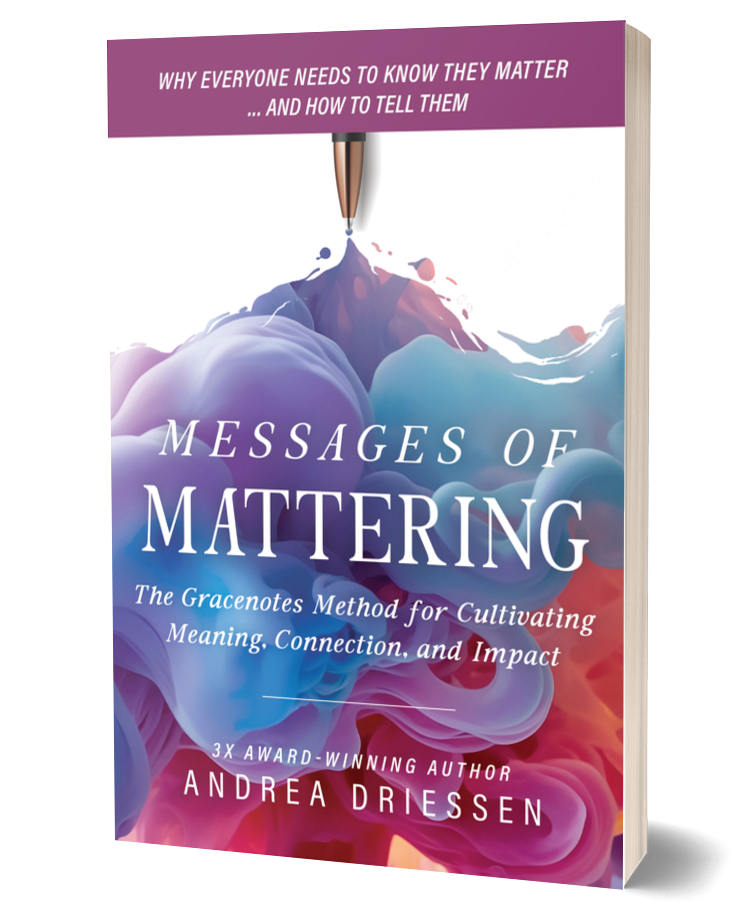
Think mattering and feeling seen are just some touchy-feely weirdness? Check out
The Math of Mattering
& The Science of Being Seen,
…and think again.

1
The former US Surgeon General named Mattering at Work as the fourth Essential in his Framework for Workplace Mental Health and WellBeing, noting: “People want to know that they matter to those around them and that their work matters. Knowing you matter has been shown to lower stress, while feeling like you do not can raise the risk for depression. This Essential rests on the human needs of dignity and meaning.”
2
The World Economic Forum highlights mattering—feeling valued and purposeful—as key to employee motivation, especially in hybrid workplaces. Gracenotes help employees see how they make a difference, and this boosts satisfaction, performance, and retention—and lessens turnover.
3
Studies show that gratitude practices focused on other people—such as writing Gracenote-type messages and expressing appreciation—increase wellbeing, life satisfaction, happiness, and positive emotions.
4
When we feel we matter—when we know that we're significant to others—we feel seen, important, and needed. A sense of belonging—what workplaces and trade associations have the potential to deliver in SPADES—increases the chance we experience mattering. *
5
In a study published in the Journal of Positive Psychology, researchers who surveyed nearly 1,800 fulltime employees concluded that, “When employees feel like they matter to their organization, they are more satisfied with their jobs and life, more likely to occupy leadership positions, more likely to be rewarded and promoted and less likely to quit.”
6
“When employees strongly agree their organization cares about their overall wellbeing, they are 4.4 times as likely to be engaged at work and 7 times as likely to strongly agree they would recommend their organization as a great place to work,” according to a March 2024 survey by Gallup.
7
Studies on the vagal (AKA vagus) nerve support show that when we feel seen and heard by important people, we feel calmer and safer. Yet being ignored or dismissed can cause depression and distress.
8
In workplaces, data show that close to 30% of workers feel invisible at work, 27% feel ignored, and almost half feel undervalued. *
9
Author of The Psychology of Mattering, Gordon Flett coined the term “anti-mattering,” which he defines as feeling insignificant, unheard, and invisible to others—the inverse of mattering. And a strong predictor of anxiety, depression, suicidal thoughts, and substance abuse. In this words: “When you feel like you matter, you are secure in the knowledge that you have strong, meaningful connections to others and that you are not going through this life alone.” *
* With sincere thanks to Dr. Zach Mercurio for aggregating this data point.

Does the world feel especially mean lately? Gracenotes make it more mean-ing-FULL.